Underpricing does not just affect your profit margins. It affects how you feel about your work, how you show up in your relationships, and how you see yourself as a leader. At first, underpricing can feel generous and humble. It can feel like you are being kind, helpful, and accessible to others. Over time, however, it often turns into resentment, exhaustion, and even self-sabotage because you are giving more than your business can sustain.
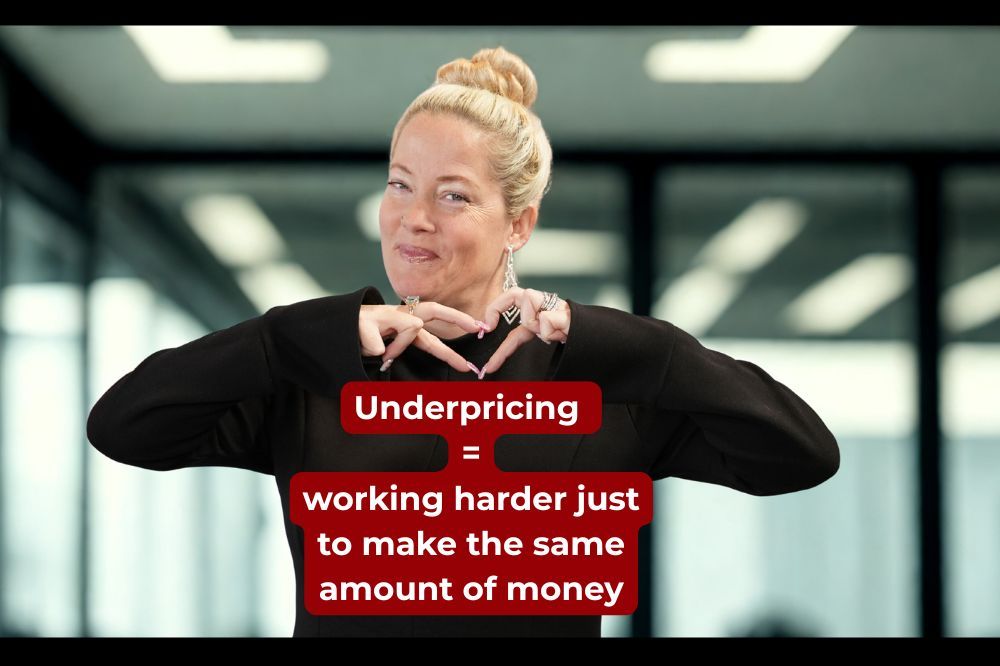
You start to notice a shift in your energy. You work harder just to make the same amount of money. You say yes when you want to say no because you feel pressure to stay booked. You overdeliver because you feel like you need to justify your pricing. Slowly, your business stops feeling like a place of creativity, leadership, and purpose, and it begins to feel like a chore that you have to push yourself through.
Underpricing Trains You to Work From Scarcity
When you underprice, you are constantly chasing volume instead of value. You need more clients, more projects, and more sales just to stay afloat. Your calendar fills up, but your bank account never reflects how hard you are working. You become busy instead of profitable, and productivity replaces sustainability.
Scarcity becomes your operating system. You rush through your days. You squeeze tasks into every open space. You feel like you cannot slow down because slowing down feels like you might lose momentum or run out of work altogether. Your nervous system stays on high alert, and your business becomes reactive instead of intentional.
How Underpricing Changes Your Relationships
When you underprice, your paycheck is usually the first thing that takes a hit. You stop fully believing that the value you offer is worth being paid at full price. Over time, you may begin to resent clients, even if they are kind and respectful. You can feel frustrated when they ask for more, even when their requests are reasonable, because they do not see how much you are already stretching yourself to make the numbers work. You feel drained because your effort and your compensation no longer match.
Underpricing also shifts how you relate to other business owners. You may find yourself trying to negotiate their pricing or using words like “affordable,” “too expensive,” or “reasonable,” even when you dislike hearing those same words applied to your own work. This often comes from operating in scarcity rather than from true alignment or respect.
When you work with other business owners, pricing is part of the language of respect. It communicates how you see your expertise and how you expect others to treat it. When your pricing is low, people may unconsciously treat your work as less valuable, even if they personally like and respect you.
This often shows up as more negotiating, more scope creep, less urgency, and less mutual respect. It is rarely intentional, but it is deeply connected to how value is communicated through pricing.
Underpricing Shrinks Your Leadership
Leadership requires margin. It requires space to think, to plan, to mentor, and to grow. Underpricing removes that margin. You stay stuck doing instead of leading. You stay focused on producing instead of creating. You remain in survival mode instead of expansion mode.
When you are always catching up, you cannot think long-term. You cannot invest in yourself. You cannot invest in your team. You cannot become the thought leader you are meant to be because your energy is being consumed by trying to keep everything running.
When you price correctly, everything begins to change. You work with fewer clients who value you more. You have room to breathe and space to think. You regain the emotional capacity to show up powerfully in rooms with other business owners and collaborators.
Final Thoughts from Your Favorite Accountant 🧡
Your pricing sets the tone for your entire business. It determines how you treat yourself, how others treat you, how sustainable your business becomes, and how much impact you are able to make.
Underpricing costs more than money. It costs confidence, clarity, and connection. When you price your work in alignment with its true value, you do not just change your income. You change how you lead, how you collaborate, and how you experience entrepreneurship.
If you want financial support that understands the human side of leadership, here is how we help:
✨ Daily bookkeeping
📊 Financial Advisory Workshops
📘 The STOP Method™ book and DIY Annual Budgeting Workbook
👉 Because at the end of the day, cash flow isn’t luck, it’s strategy.